Several years ago a friend of mine asked if I would shoot her best friend's wedding. The couple was very poor and would not be able to pay me anything. I said no. Not because I am all that mercenary, but because it was a long way from where I live and I was trying to get out of weddings. She asked again...and again...until I said yes. The couple was indeed poor, living in a mobile home in the middle of farm country next to the grassy field where they were going to get married. Both had been in difficult marriages before and they had a passel load of kids between them. All the men wore cowboy hats and everybody drank lots of beer...even before the ceremony started. They were as country and as unsophisticated as I have ever seen but there was a feeling like they had got it right this time and were truly happy together. The ceremony was quiet and uneventful under the trellis that had been built for the occasion. When it was over the two nearly ran to the back of the crowd where he scooped her up and hugged her for all she was worth. In the process his hat fell off and on his sunburned cheeks you could see big crocodile tears. She was officially his at last. It was one of the most touching scenes I have ever witnessed at a wedding and I felt humbled to have seen it. It is among my favorite shots though no one would call it a great shot on technical terms.
My point is this; great wedding photography is not just about making people look good, though I am all for doing that as much as we possibly can, no, we must never forget that the true purpose of wedding photos is to capture those magic moments that can never be staged. No one cares what kind of camera you have or whether or not you were shooting in RAW, as long as you capture those moments of magic and preserve them forever.
I tell people all the time that if they want to shoot weddings they need to have the technical aspects of photography down cold. Why? For this very reason; about the time you have to fiddle with a dial or make an adjustment you are going to miss just such a moment and you can never ever get it back. Practice. Read the manual again. Put your "full manual" pride in your back pocket because no one but you cares about such things. No one ever says, "Be sure to capture the magic moments" but then they shouldn't have to; that's the real reason they hired you and you have a moral obligation to come through for them.
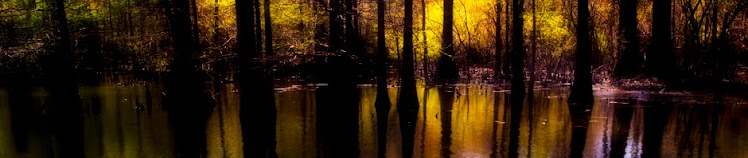
Peacock Springs
Showing posts with label Photography. Show all posts
Showing posts with label Photography. Show all posts
Sunday, September 12, 2010

Thursday, September 2, 2010
The Only Rule in Photography You Really Need to Know

If you talk to people about photography and especially about composition you are likely to hear a lot of rules. "Always keep the sun over your shoulder." "Always use leading lines." "Always keep the horizon level." "Don't get too close/far." and the grandaddy of them all "Always place important objects on the thirds." (Rule of Thirds)
There's just one problem with these rules; all of them have been successfully broken to produce great results. Sometimes they work and sometimes they don't. As a matter of fact, many of the same people who give you these rules will add the caveat; "But this isn't meant to be a hard-and-fast rule." Well in my opinion, if it's not hard and fast then it isn't really a rule at all. More like a helpful suggestion. Some, like the rule of thirds, have been so over used that they end up doing more damage than good. No, I think there is just one hard-and-fast rule in photography, one that must never be broken and here it is:
You are responsible for every element in your image.
That's it. Sounds too simple, right? It is very simple but the implications are quite profound. It means that you have to assume responsibility for EVERYTHING in the image; exposure, focus, depth of field, arrangement of elements, everything. Plus it means that you need to assemble these things in a way that drives home the point you were trying to make. Trying to make a beautiful image? Do you want to express an emotion? Are you trying to convey the sensation of movement? Then every element needs to point the viewer in the direction you intend. There are no excuses; it either works or it doesn't.
Edgar Allan Poe mastered the art of the short story because he understood that every word in a his stories had to point the reader to his intended target. Read "The Telltale Heart" again and see if you don't recognize Poe's careful attention to every word in every line to produce the effect he is after: and a powerful effect it is. That's what real composition is and that's why this is the only rule you really need to remember.
Subscribe to:
Posts (Atom)